
The Myth of Danish Purity
Or: How I Learned That "Trust" Is What Insiders Call It When They Win

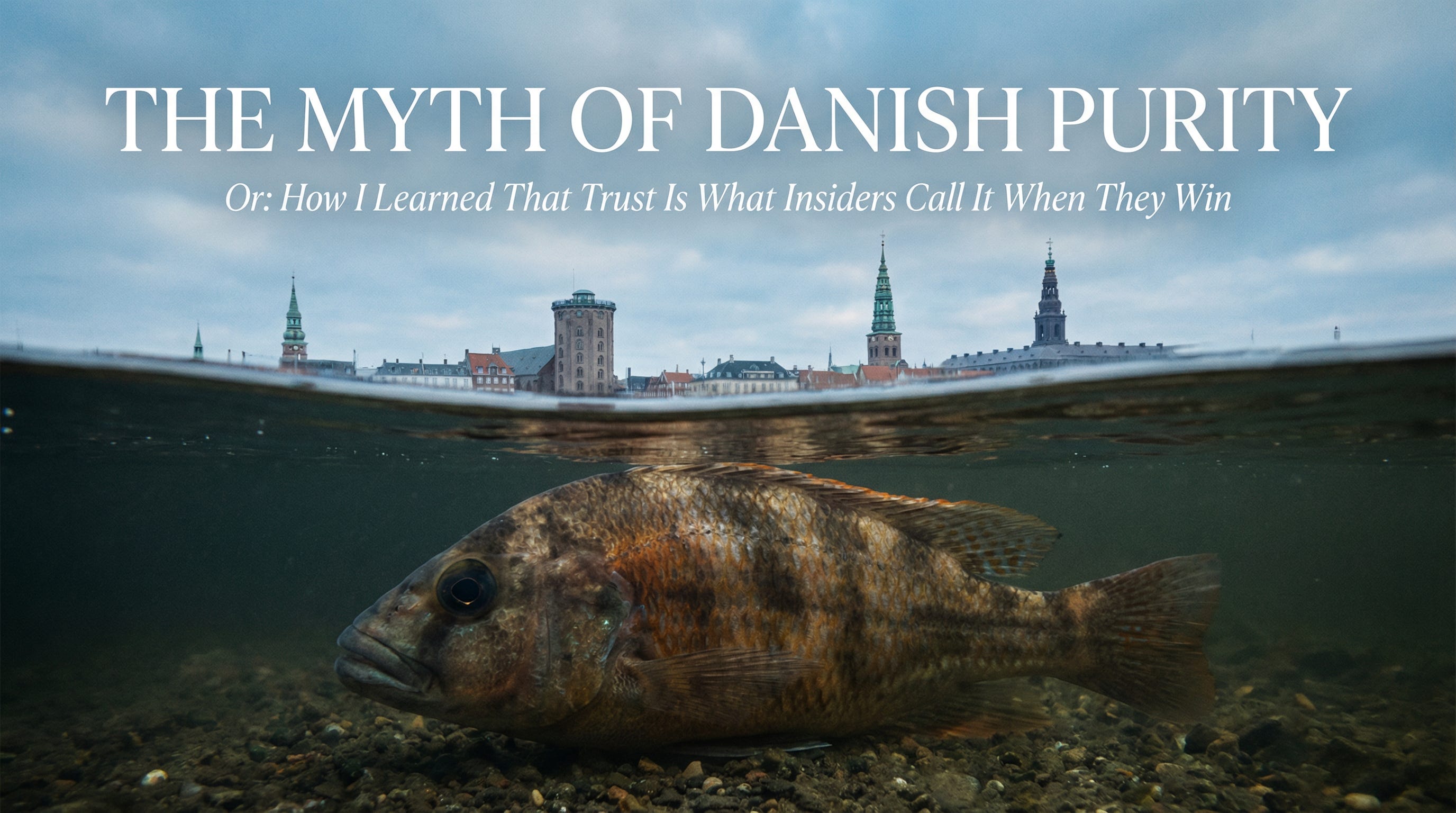
There’s a fish called the Nimbochromis that lives in Lake Malawi. It’s evolved a remarkable survival strategy: it plays dead. It sinks to the bottom, motionless, and waits. When smaller fish come to investigate what looks like an easy meal, the Nimbochromis springs to life and devours them.
I thought about that fish when I saw the username of someone commenting on my company’s bankruptcy on a Danish investment forum in January 2026.
“Corruption is more the rule than the exception in Romania,” wrote Nimbochromis.
He wasn’t alone. Across the forums, anonymous commenters competed to explain why Shape Robotics—a company I’d grown from 0.8 million to 302 million Danish kroner in revenue—had collapsed. The explanations shared a common theme: me. A Romanian. Obviously corrupt. Case closed.
None of them asked what seemed to me like an obvious question: If I was a fraud, where were the charges? Where was the conviction? Where was the evidence?
There was none. Not a single criminal charge in any jurisdiction. Not a single regulatory finding.
Just a Romanian passport and the assumptions that come with it.
But here’s the thing about the Nimbochromis defense—about playing dead while predators circle: it only works if no one’s watching closely. If someone actually examines what happened to Shape Robotics, they’ll find something far more interesting than a Romanian CEO who may or may not be trustworthy. They’ll find a Danish analyst who admits on tape that he considers himself an insider, who extracted confidential information in private meetings, who sold his shares the same day as his network while his bank pumped the stock to retail investors.
They’ll find profits that don’t add up. They’ll find a 10,320% increase in someone’s holding company earnings during exactly the period when Shape Robotics was being destroyed.
And they’ll find a media counter-strike so intense, so coordinated, that it only makes sense if someone is very, very worried about what I discovered.
This is that story.
Part One: The Perfect Defense
Let me tell you how this is going to go.
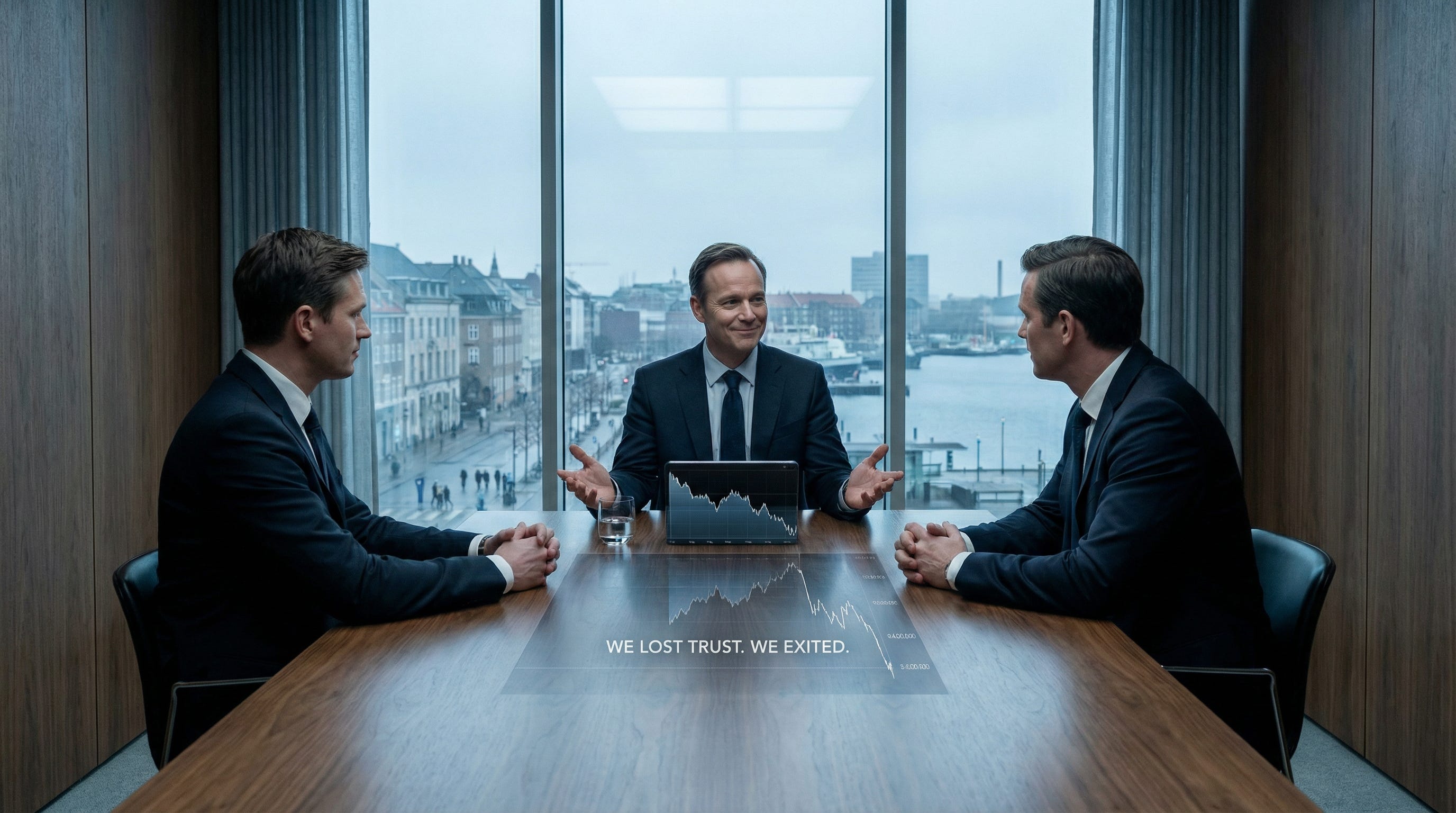
At some point, someone will finally ask Lars Topholm, Martin Bundgaard, and Søren Bendixen to explain why they coordinated the sale of 532,000 shares of Shape Robotics between April 24 and June 4, 2024. Why they extracted approximately 21 million kroner at peak prices. Why Lars’s bank Carnegie was simultaneously promoting the stock to other investors while his personal network was dumping it.
And they will say, with the practiced sincerity of men who have rehearsed this in their minds: “We lost trust in the company. So we exited.”
In Denmark, this will sound reasonable. Denmark is the world’s most trusting society—they have studies about this, rankings, a whole national identity built around the concept of tillid. When a respected Carnegie analyst with 35 years in Danish finance says he “lost trust” in a company, other Danes will nod sympathetically. Of course he sold. Who wouldn’t?
But here’s where it gets interesting.
If Lars Topholm “lost trust” after his private meetings with me on April 15-16, 2024—meetings where he extracted detailed information about our cash flow situation, our capital raise timeline, our Poland opportunity—then he lost trust based on information that regular investors didn’t have. He knew something they didn’t know.
When he sold his shares on April 26, the same day that Sundvænget (his network’s investment vehicle) dumped 94,927 shares, he wasn’t making a decision based on the same public information available to the people buying those shares from him.
So the “trust” defense isn’t really a defense at all. It’s more like... a confession?
Let me put it differently. In the language of securities regulation—which is less poetic but more legally precise—trading on material non-public information is called insider trading. And coordinating trades among connected parties while one party is promoting a stock to outside investors is called market manipulation.
The “lost trust” defense is, essentially, an admission that they did both of these things but hoped no one would notice.
Part Two: The Timeline
I’m going to walk you through what happened, step by step. The dates matter. The sequence matters. Once you see it laid out, you can’t unsee it.
Before April 15, 2024:
Lars Topholm owns 3,500 shares of Shape Robotics. He hasn’t disclosed this to anyone—not to the company, not to the public. He’s Carnegie Bank’s Head of Research, which means when he speaks, institutional investors listen. He’s also Chairman of Aerbio, a biotech company that happens to need €50 million from the same Danish investor pool that we need €20 million from.
His “best friend” Martin Bundgaard—Lars’s words, on tape—owns 318,331 shares. Søren Bendixen owns about 70,000. Their investment vehicle Sundvænget owns another 140,000.
Total network position: approximately 532,000 shares.
They’re all Aerbio investors. This will become important.
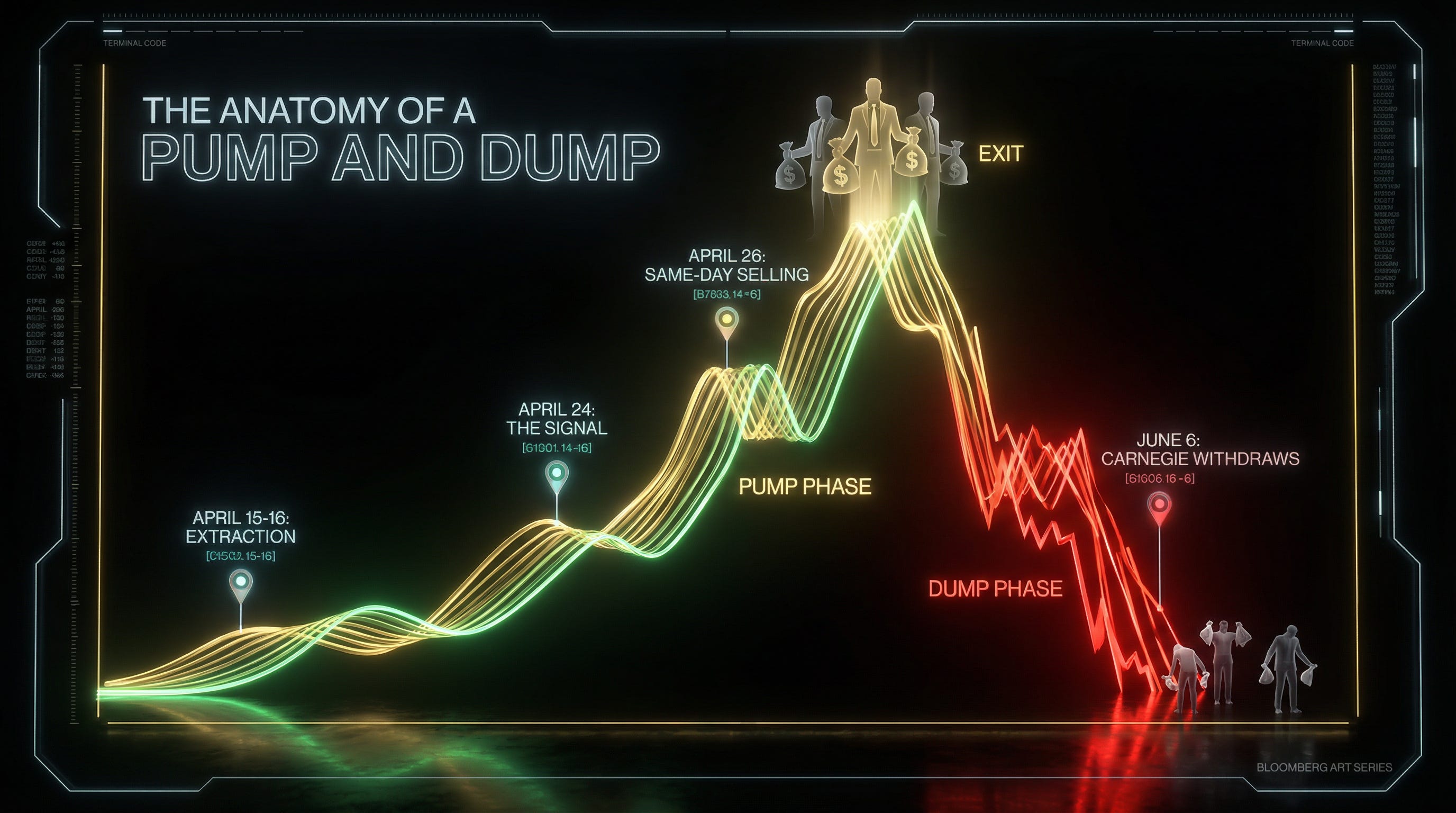
April 15-16, 2024:
Lars attends private meetings with our management. He’s there in an “advisory” capacity, helping us think through our capital raise. These are confidential meetings. He learns about the Poland opportunity—40% market share, €35 million in government contracts. He learns about our cash flow situation. He learns about our timeline.
This is what regulators call “material non-public information.”
April 16-24, 2024:
Carnegie’s sales team—working under Lars—actively promotes Shape Robotics to institutional investors across Europe. I have the transcript. Someone on Carnegie’s team explains: “We would have primed some of the key guys and that would have been Lars doing that. So they’re not starting totally from scratch.”
So Lars has just been in confidential meetings. He’s learned things the public doesn’t know. And now his team is pumping the stock.
If he had “lost trust,” why would his bank spend eight days promoting the stock?
You don’t pump a stock you don’t trust. You pump a stock you’re about to dump.
April 24, 2024:
Lars sends an email. It attacks our CFO. And he CC’s Martin Bundgaard—who, remember, has no official role in the company. He’s just Lars’s best friend who happens to own 318,331 shares.
In the email, Lars compares Shape to Chemometec. At the time, Chemometec was one of Denmark’s most heavily shorted stocks.
I believe this email was a signal. I believe this is when the coordinated selling began.
April 26, 2024:
Lars sells all 3,500 of his shares. Sundvænget sells 94,927 shares.
Same day.
This is documented in VP Securities records. Same-day selling by supposedly independent parties.
April 24 - June 4, 2024:
The entire network exits. Every share. They extract approximately 21 million kroner at prices between 42 and 45 kroner—the peak.
June 6, 2024:
Carnegie withdraws from helping Shape Robotics.
The timing is... precise. Exactly two days after the last Aerbio investor finished selling. As if someone wanted to make sure everyone was out before the bank stopped supporting the stock.
July 11, 2024:
I meet Lars for breakfast at Villa Copenhagen. I record the entire 90-minute conversation. On tape, he says two remarkable things.
First: “Martin is my best friend. I speak to him anytime.”
Second: “I consider myself an insider. I can’t talk to anyone.”
I’ll just let those statements sit there for a moment.
Part Three: The Math That Doesn’t Add Up
Here’s where I need to tell you about something I found while researching this case. Something that should make every investor in Danish markets extremely uncomfortable.
Søren Bendixen has a holding company called Fredericiagade Holding ApS. It’s registered in the Danish Business Registry. The numbers are public.
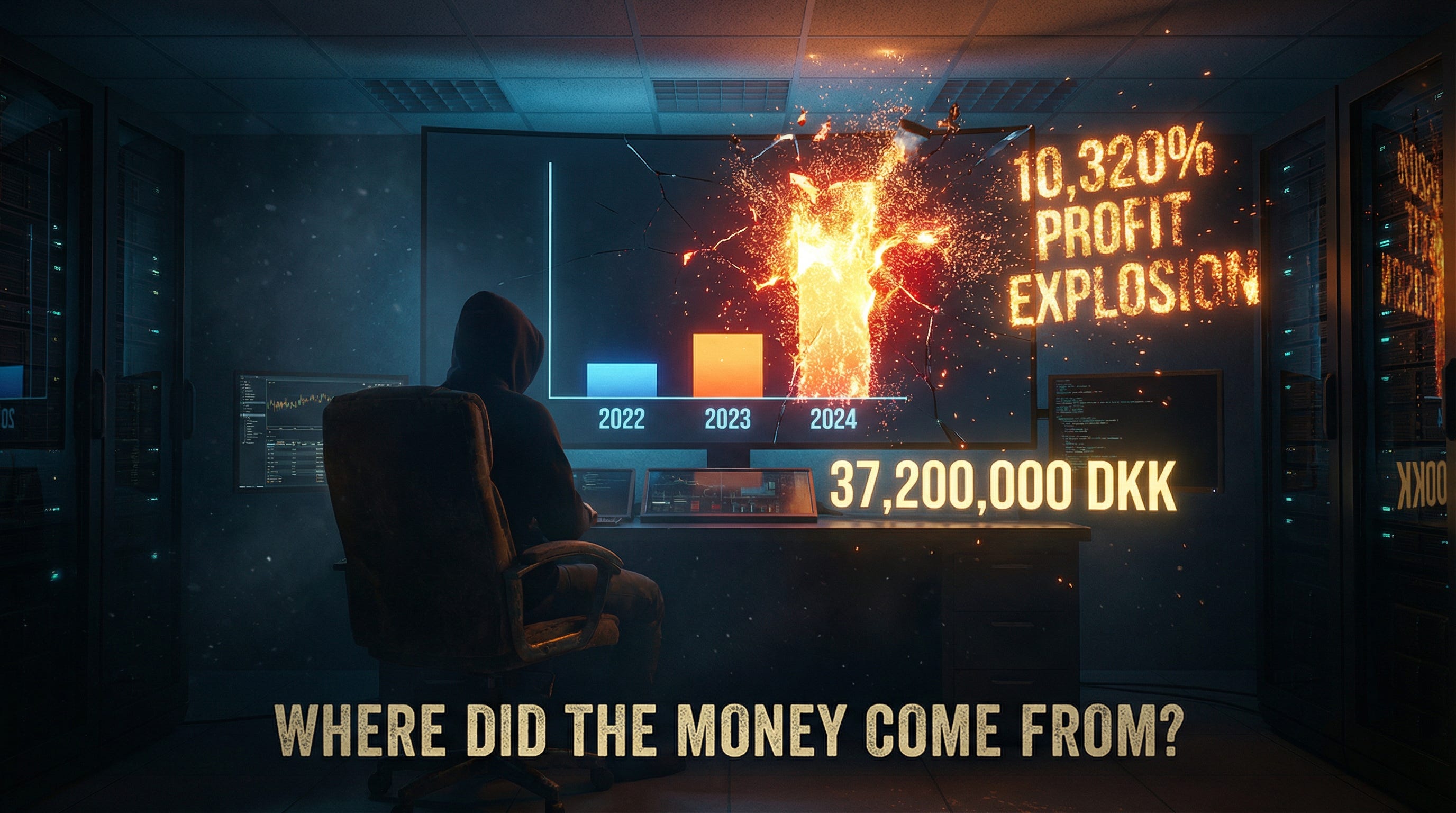
In 2022, Fredericiagade Holding reported a profit of 357,000 kroner. Not a lot. A modest return on a modest investment portfolio.
In 2023, the profit jumped to 12.7 million kroner. That’s a 3,458% increase. Interesting.
In 2024—the year of the Shape Robotics scheme—the profit was 37.2 million kroner.
Let me write that again so you don’t miss it.
37.2 million kroner.
That’s a 10,320% increase from 2022.
Now, if Søren Bendixen only sold approximately 70,000 Shape Robotics shares at around 42 kroner, that’s roughly 3 million kroner. Where did the other 34 million come from?
I have a theory.
Under EU short selling regulations, positions above 0.1% of a company’s shares must be reported. But there’s a loophole. If you spread your positions across multiple omnibus accounts—pooled brokerage accounts where individual holdings are aggregated—you can keep each position below the reporting threshold. Your total short position never becomes public.
If the network was shorting Shape Robotics through omnibus accounts while simultaneously selling their long positions... while Lars’s bank was pumping retail investors into buying...
The total extraction wouldn’t be 21 million kroner.
It could be 55 million kroner. Or more.
I don’t know this for certain. But I know that Søren Bendixen’s holding company had a 10,320% profit increase during exactly the period when this scheme was being executed. And I know that someone needs to explain where that money came from.
Part Four: The Country That Doesn’t Prosecute
At this point, you might be wondering: Why hasn’t anyone investigated this?
Welcome to Denmark.
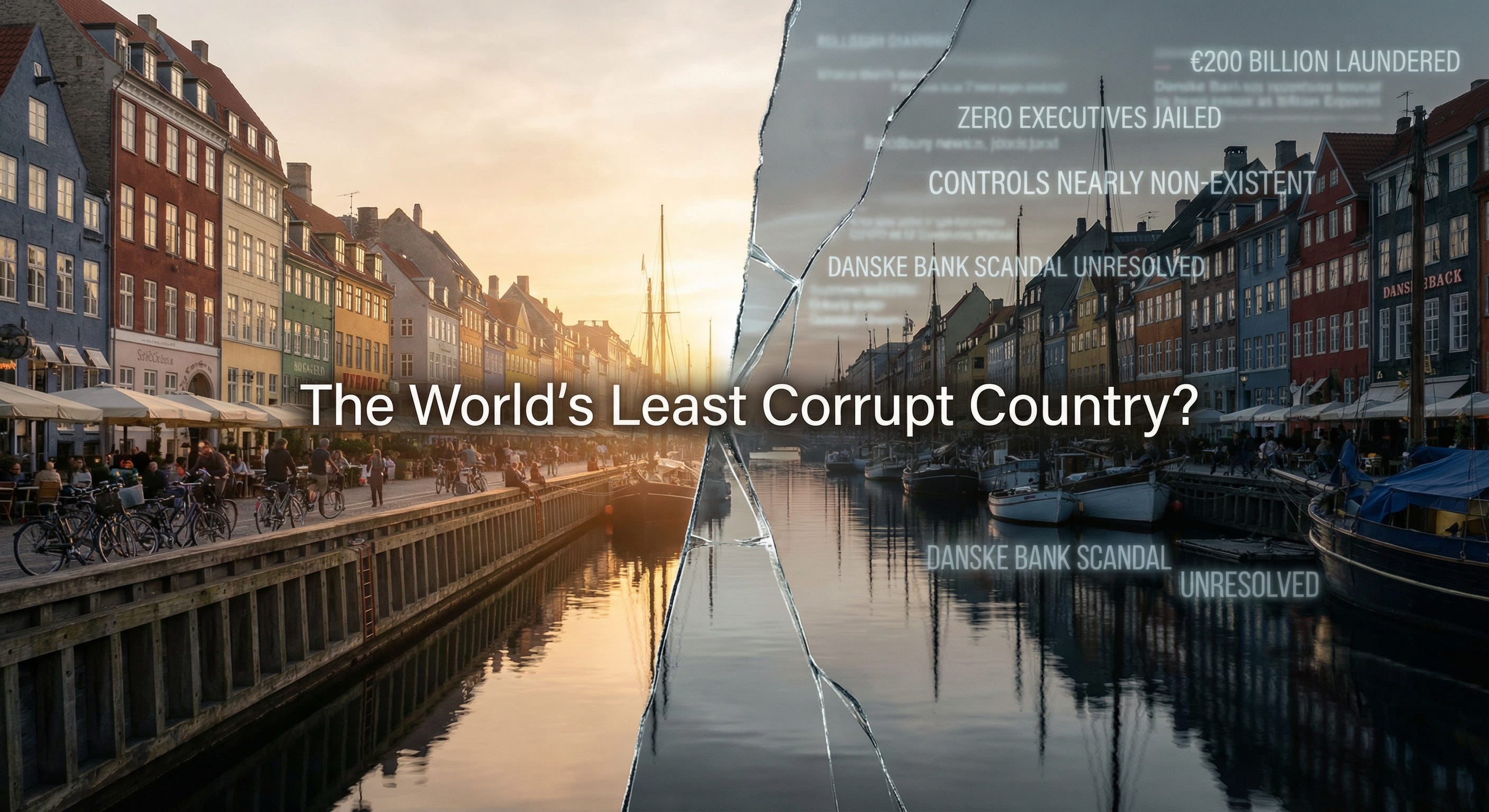
Let me tell you about the country that ranks number one on the Corruption Perceptions Index.
Between 2007 and 2015, approximately €200 billion in suspicious transactions flowed through Danske Bank’s Estonian branch. Two hundred billion euros. The largest money laundering scandal in European history. Russian oligarchs, organized crime, corrupt officials—they all used Denmark’s most prestigious bank as a laundromat.
The U.S. Department of Justice noted that by February 2014, “Danske Bank knew that some customers were engaged in highly suspicious and potentially criminal transactions.”
Number of Danish bank executives who went to prison: zero.
Thomas Borgen, the CEO, resigned. He was sued. In November 2022, a Danish court cleared him of liability.
Then there was the cum-ex scandal. Denmark’s tax authority, SKAT, paid out approximately €1.7 billion in fraudulent tax refunds. When Denmark tried to recover the money in British courts, the judge ruled that SKAT’s controls were “so inadequate that they were nearly non-existent.”
He used the word “flimsy.”
Denmark lost the lawsuit.
Number of officials jailed: zero.
Then there was Atea, Denmark’s largest public corruption case. The IT company bribed employees of the National Police, the Ministry of Foreign Affairs, the Armed Forces, and—this is almost too perfect—the Military Intelligence Services. They called one of their bribery schemes “Thailand Open.”
Nearly fifty public officials were arrested. The maximum corporate fine was €1.3 million.
According to Transparency International’s own assessment, Denmark “opened 10 investigations, commenced no cases, and concluded no cases” for foreign bribery between 2016 and 2019.
And here’s the kicker: “Denmark does not publish statistics on foreign bribery investigations or cases.”
The world’s “least corrupt” country doesn’t publish corruption statistics.
Academic research confirms what you might be starting to suspect: prison sentences for white-collar crime in Denmark are, in the careful language of peer-reviewed studies, “a rather rare occurrence.”
Part Five: The Other Side of the Story
Now let me tell you about the country where I come from. The one that Nimbochromis thinks is ruled by corruption.
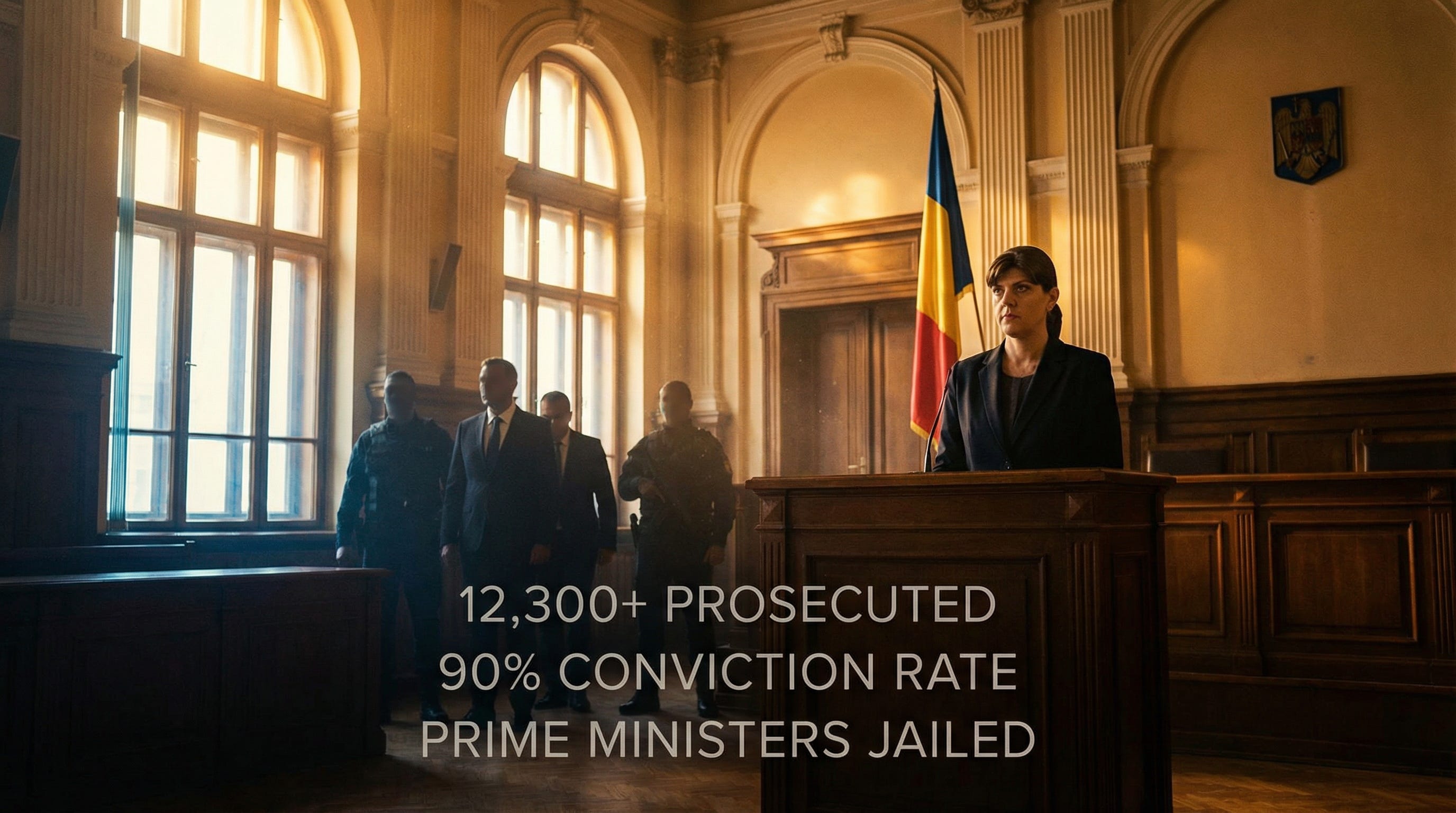
In 2013, a prosecutor named Laura Codruța Kövesi took charge of Romania’s National Anti-Corruption Directorate—the DNA.
What followed was unprecedented in European history.
The DNA prosecuted over 12,300 officials. The conviction rate approached 90%. They didn’t go after small-time bureaucrats. They went after everyone.
Adrian Năstase was Prime Minister from 2000 to 2004. The DNA convicted him of bribery. He tried to kill himself when the verdict was announced—shot himself in the neck. He survived. He went to prison. The first Romanian head of government ever imprisoned.
Liviu Dragnea was, by 2018, the most powerful politician in Romania. President of the Chamber of Deputies. President of the ruling party. The DNA convicted him of abuse of power. When the verdict was announced, Romanians celebrated in the streets of Bucharest.
This wasn’t some show trial. This was actual accountability, applied to the most powerful people in the country.
In 2019, Laura Codruța Kövesi was appointed the first European Chief Prosecutor.
A Romanian anti-corruption prosecutor now leads Europe’s fight against financial crime.
Meanwhile, anonymous Danish investors call me corrupt because of my passport.
Part Six: Why This Matters More Than Shape Robotics
Shape Robotics was a small company. 302 million kroner in revenue. Educational robots for schoolchildren. Not exactly systemically important.
I was a nobody. A Romanian outsider. No powerful Danish connections.
So when I filed a market manipulation complaint with Nasdaq in November 2025, you might expect the response to be... nothing. A small company complaining about a respected analyst. Who cares?
Instead, here’s what happened.
Within weeks of me publishing my investigation on Substack, Finans—a major Danish financial publication—launched a counter-strike. But they didn’t investigate Lars Topholm. They investigated me.
They dug up a case from 2017. Eight years ago. A Romanian insolvency case that had been fully disclosed and was completely unrelated to Shape Robotics.
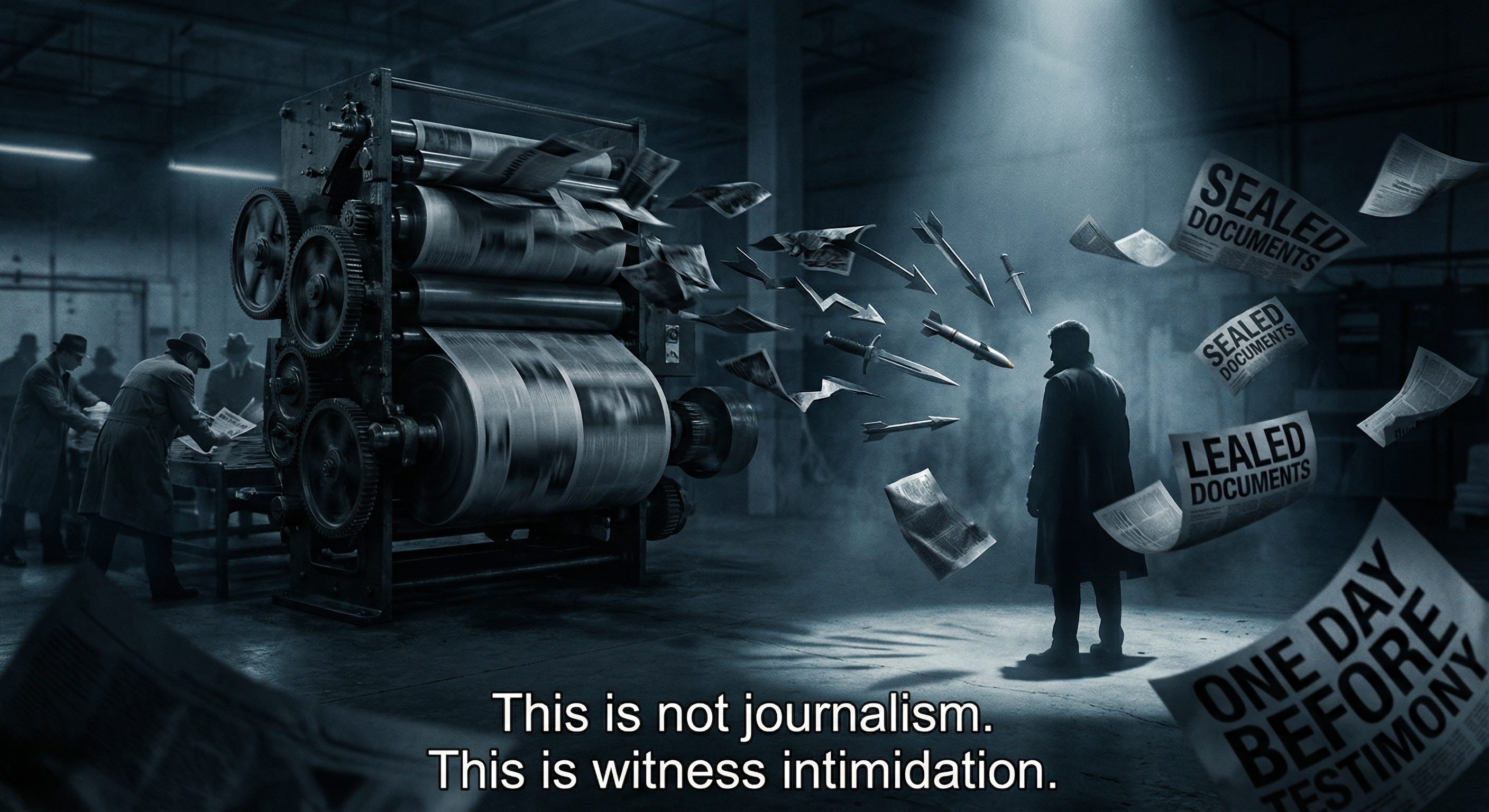
And then they obtained sealed whistleblower documents.
I need to explain what this means. In 2018, I went to Romanian anti-corruption authorities as a protected whistleblower. I reported fraud at a previous company. That testimony is sealed under Romanian law and EU directive. It’s protected.
The only way Finans could have obtained those documents is through criminal disclosure. Under Romanian law, leaking sealed court documents carries a penalty of one to five years imprisonment.
And they published on January 27, 2026—one day before I was scheduled to testify to the bankruptcy trustee.
One day.
This is not journalism. This is witness intimidation dressed up as journalism.
But here’s what I want you to understand: the intensity of this response only makes sense if I’ve discovered something real.
If my accusations were baseless, they would be ignored. Who cares what a Romanian CEO says about a respected Danish analyst? Let him yell into the void.
But they didn’t ignore it. They obtained criminally sealed documents. They timed the publication to maximize damage. They went all in.
The intensity of the attack is proportional to the threat.
They’re not attacking because I’m wrong. They’re attacking because I’m right.

Part Seven: The Calculation

Let me tell you what I think happened.
Lars Topholm looked at me and saw an easy target. A Romanian. An outsider. Someone with a disclosed insolvency case in his past. No media connections, no establishment protection, no powerful friends.
He calculated that if things went wrong, no one would believe me. Lars has 35 years in Danish finance. He’s Carnegie’s Head of Research. He speaks at conferences. When Lars says something, people listen.
When a Romanian CEO makes accusations? Everyone remembers that corruption is “the rule” in Romania.
They were too courageous because I looked easy to destroy.
They didn’t understand several things.
They didn’t understand that I came from a country that jails its Prime Ministers. That I grew up watching the DNA achieve 90% conviction rates. That I have a different relationship with accountability than they do.
They didn’t understand that I documented everything. Every meeting. Every email. Every trade. Every word.
They didn’t understand that when you destroy someone’s company, take away their livelihood, and then attack them with criminally obtained documents—you don’t create a victim. You create an enemy.
They thought this would be over quickly. The Romanian would go away. The media attack would silence him. The bankruptcy would bury the story.
Instead, they created someone with nothing left to lose, documentary evidence of everything they did, and a story that keeps getting more interesting the deeper you dig.
Søren Bendixen’s holding company had a 10,320% profit increase during the year of the scheme. Where did that money come from?
Someone is going to have to answer that question eventually.
Part Eight: The Reckoning
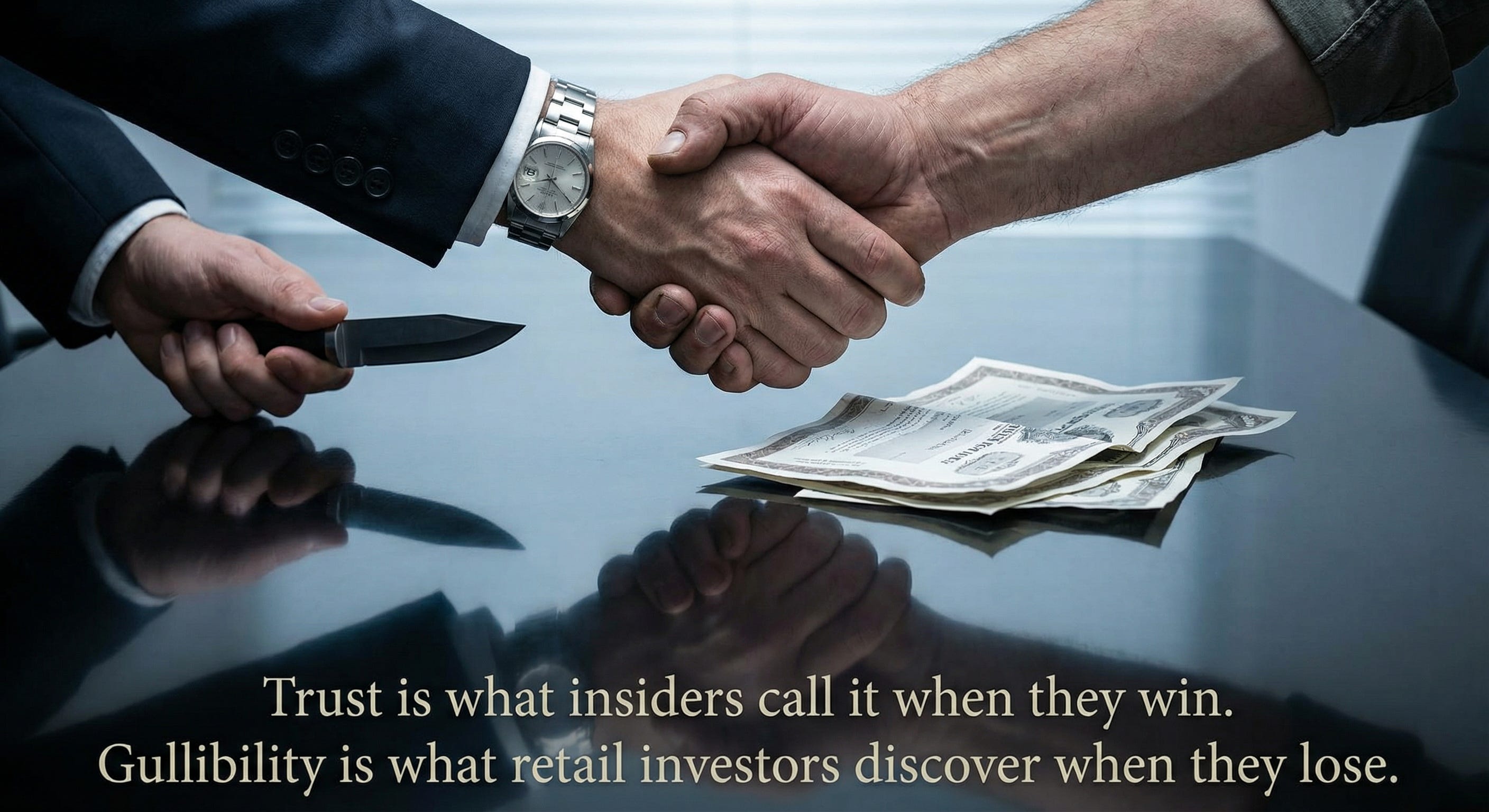
I’m going to tell you what I know for certain, and what I suspect.
What I know:
Lars Topholm owned undisclosed shares in Shape Robotics while serving as an “advisor” to the company. He extracted material non-public information in private meetings. He sold his shares the same day as his network’s investment vehicle. His bank pumped the stock while his network dumped it. On tape, he admits: “I consider myself an insider.”
Martin Bundgaard, Lars’s self-described “best friend,” owned 318,331 shares and was CC’d on the email that appears to have been the coordination signal.
Søren Bendixen’s holding company went from 357,000 kroner profit in 2022 to 37.2 million kroner profit in 2024—a 10,320% increase during exactly the period of the scheme.
Finans obtained criminally sealed whistleblower documents and published them one day before my testimony.
Denmark, the world’s “least corrupt” country, does not publish statistics on corruption investigations.
What I suspect:
The total extraction was far larger than the documented 21 million kroner. The profits in Bendixen’s holding company suggest they may have been shorting through omnibus accounts while selling their long positions and while Carnegie pumped retail investors to buy.
The media attack isn’t about Shape Robotics. It’s about what I’ve discovered. The intensity only makes sense if this threatens something bigger than one small educational robotics company.
Epilogue: We Will Never Back Down

There’s a moment in Ayn Rand’s The Fountainhead where Howard Roark, the architect who refuses to compromise his vision, stands alone against the entire establishment. They attack him, marginalize him, try to destroy him. But he doesn’t bend.
I used to think that was just fiction. The kind of heroic narrative that sounds good in books but doesn’t survive contact with reality.
I don’t think that anymore.
I am Mark Abraham. I’m Romanian. I built a company from Zero to 302 million kroner. I served 300,000 students with educational technology. I created seventy jobs.
I exposed market manipulation. I documented the scheme. I filed complaints. I’m suing for defamation. I’m pursuing criminal complaints for the leaked sealed documents.
And I’m writing this, so that everyone who reads it understands what happened.
My Romanian nationality cannot be used against me. The evidence is documented. The timeline is precise. The profits are in public records.
In December 2025, the European Court of Justice ruled that Denmark’s “ghetto law”—which targets neighborhoods based on the proportion of “non-Western immigrants”—may constitute direct ethnic discrimination.
Denmark, the mother of happiness and fairness, ruled potentially discriminatory by Europe’s highest court.
The myth is cracking.
They thought destroying a Romanian would be easy. They calculated that no one would believe me, that the media attack would silence me, that I would go away quietly.
They made a grave mistake.
Every attack makes me stronger. Every sealed document they leak becomes evidence of their crimes. Every coordinated media strike proves the conspiracy exists.
We will never back down.
If you want to follow this story, subscribe to my Substack:
Key investigations:
📖 THE CURRENCY KILLER — The complete investigation with trading data, recordings, and the 8-step causality chain
📖 The Price of Speaking Up — What happens when a whistleblower fights back
📖 In Order to Get Out of Hell, You Have to Drive Through It — The full history
📖 Why We Are Suing Finans — The €45 million defamation lawsuit
📖 Fifty-Three Euros Per Minute — The human cost
This essay is dedicated to every Romanian who has been judged by their passport instead of their character: You are not alone.
The truth is on our side.
© 2026 Mark Abraham. Share freely with attribution.