
In Order to Get Out of Hell, You Have to Drive Through It
The year I became CEO and discovered our chairman had already driven another company into the exact same wall—then watched everyone leave except one man

December 24, 2025 – Christmas Eve
Written from Bucharest, Romania
I’m writing this from Romania on Christmas Eve, where I live and where I’ve always lived, though most people assume I’m in Copenhagen because that’s where Shape Robotics is listed and where I work when business requires it. The distance matters. Not just geographically, but philosophically. I grew up here reading Kierkegaard and Dostoyevsky as a teenager, trying to understand what it means to live in a world that lies to itself constantly. Not abstractions—survival questions. How do you stay sane when systems pretend everything is fine when it’s not? How do you build something real when the entire culture around you is optimized to avoid discomfort?
Those weren’t academic questions in Romania in the 90s and 2000s. They were the operating system you built for yourself or you didn’t make it.
I’m an existentialist because I believe the only life worth living is one lived in full confrontation with what is true, even when it costs you. I’m an objectivist because I believe reality exists independent of what we wish it to be, and that any system—personal, corporate, cultural—that refuses to see reality will eventually be corrected by it, harshly and without warning. That combination is not comfortable. It’s especially not comfortable when you spend a year watching shareholders lose hundreds of millions in market value not because the business failed, but because history repeated itself and the person at the center couldn’t see it.
This is that story. It’s also the story of watching an entire board exodus happen in real time as crisis hit—and one man, Aurel Nețin, who stayed, bought shares with his own money, and became chairman when everyone else was running.
But at the center of everything is a tragic pattern: a chairman who presided over Paralenz going insolvent owing EIFO 25+ million DKK, and then became chairman of Shape Robotics with the exact same structure—EIFO guarantee, Danske Bank facility—and genuinely believed it wouldn’t happen again.
His name is Jeppe Frandsen. And I really like him. But liking someone doesn’t mean you ignore that they’re repeating a pattern they can’t see.
This is Denmark 2025.
And this is also the story of how we’re now—finally—driving through.
The Timeline: From Growth to Crisis to Redemption
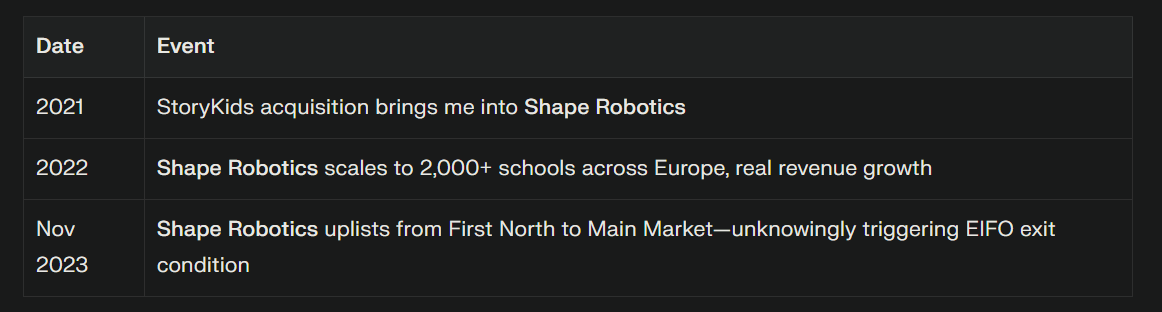
2021–2023: Building Something Real
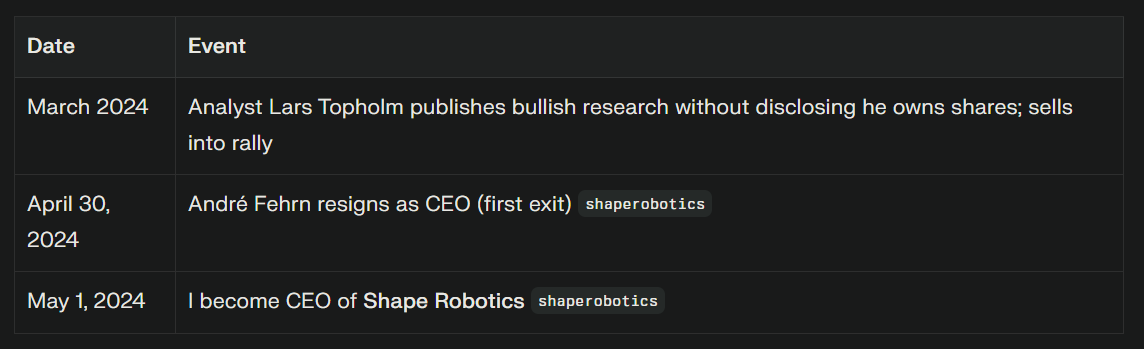
2024: The Year of Hidden Exits
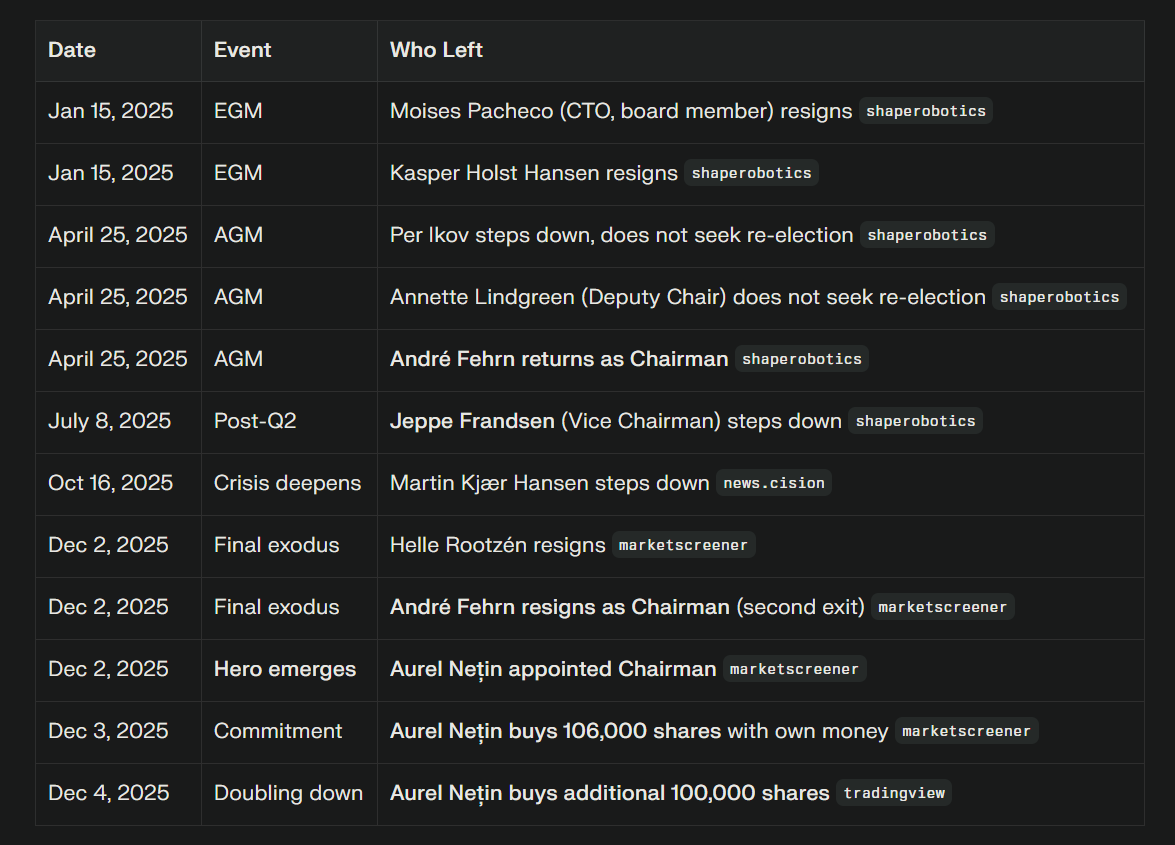
2025: The Board Exodus Begins
The Board Exodus: Who Stayed, Who Ran
Of the board members serving when crisis hit in 2024–2025, only one remained and bought in:
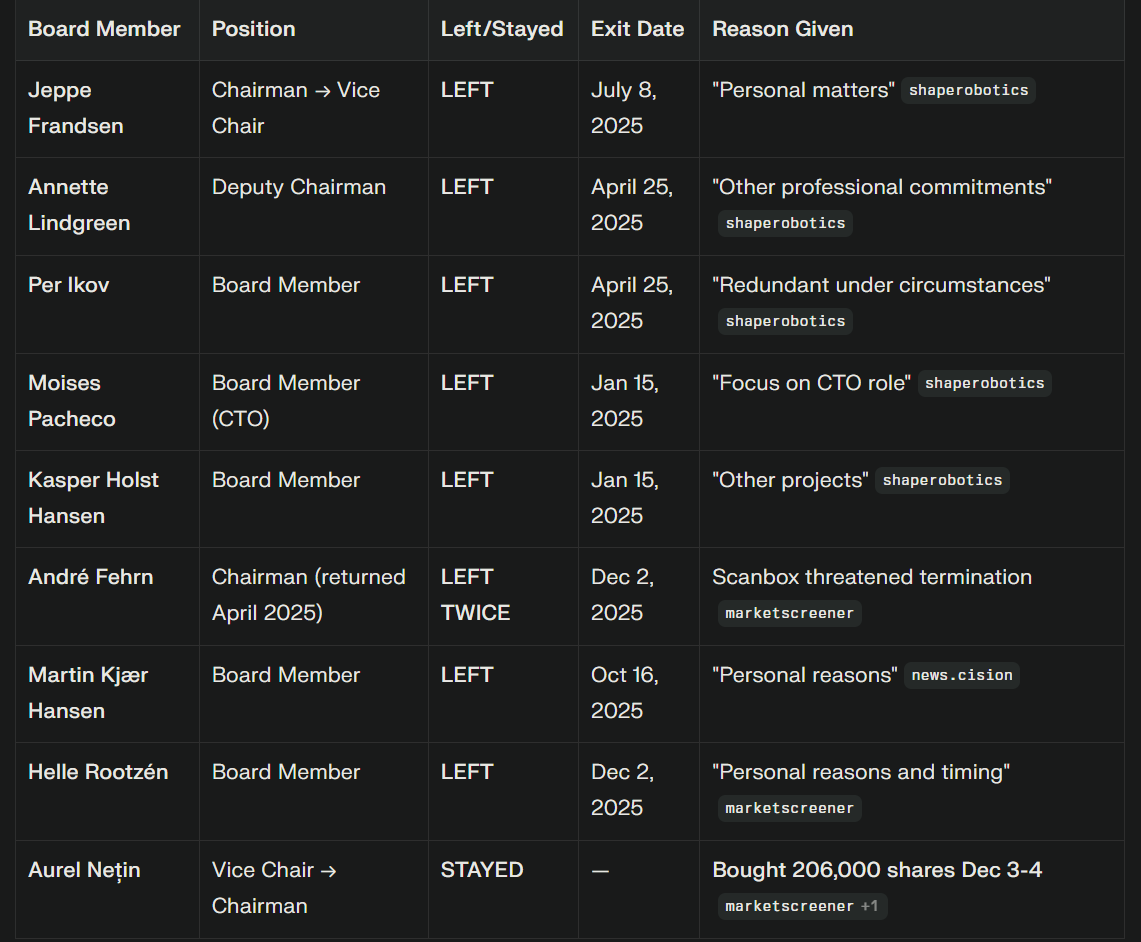
The pattern is clear: as crisis deepened, everyone left except Aurel Nețin.
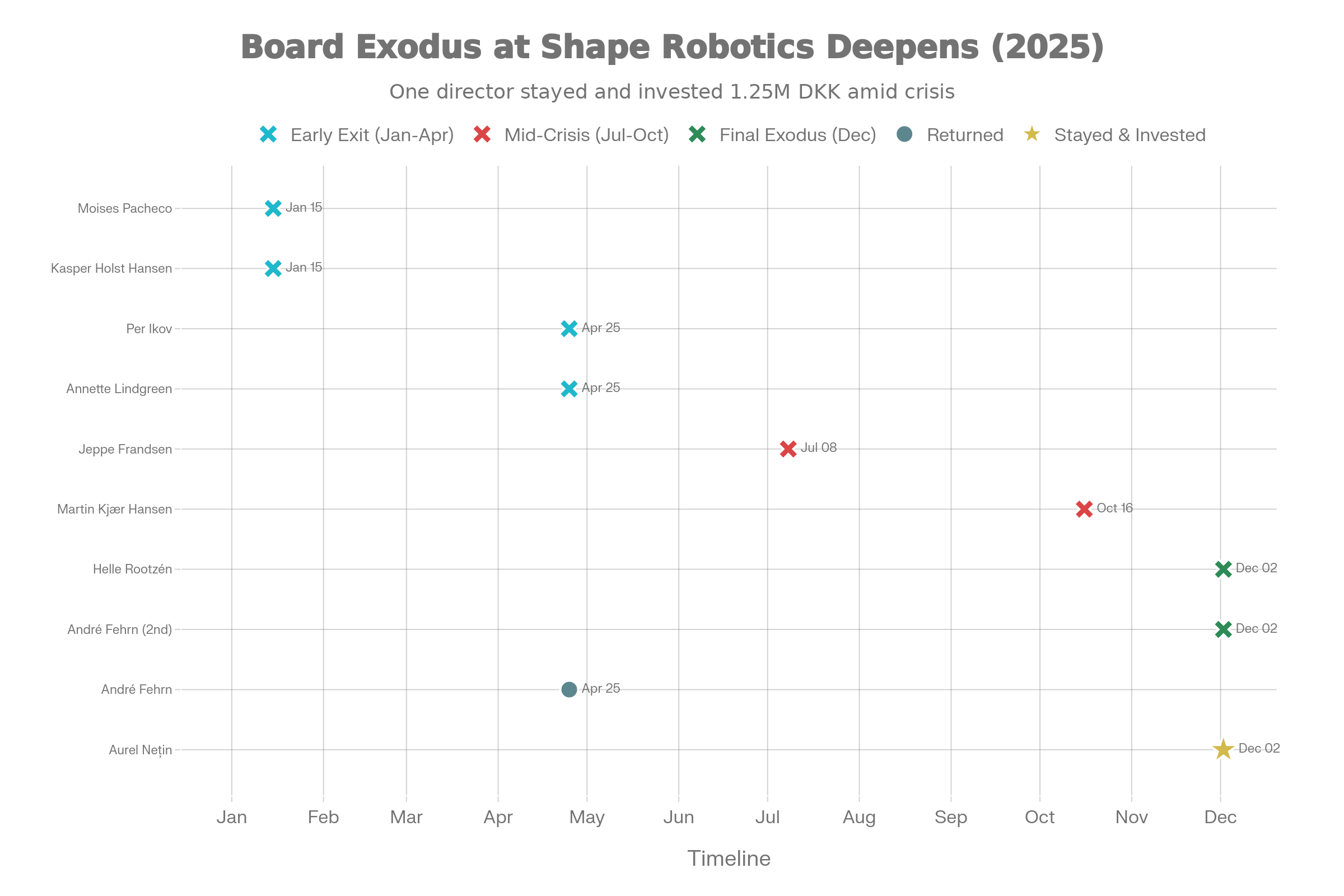
The pattern is clear: as crisis deepened, everyone left except Aurel Nețin.
I became CEO of Shape Robotics on May 1, 2024, one day after the previous CEO—André Fehrn—resigned. Not because I wanted the title, but because someone had to take the wheel and the company was heading toward a wall I could see clearly. André left because he saw what was coming and didn’t want to fight it. I don’t hate him for that first exit. Some people are builders. Some people are fighters. André is a builder, and what was ahead of us was a fight.shaperobotics
What I didn’t understand at the time was what André knew and didn’t say: the EIFO problem, the analyst situation with Lars Topholm and Martin Bungaard, the trading patterns, the hidden exit conditions buried in the uplisting terms. He saw the fire and stepped aside. I saw the same fire and drove toward it instead.
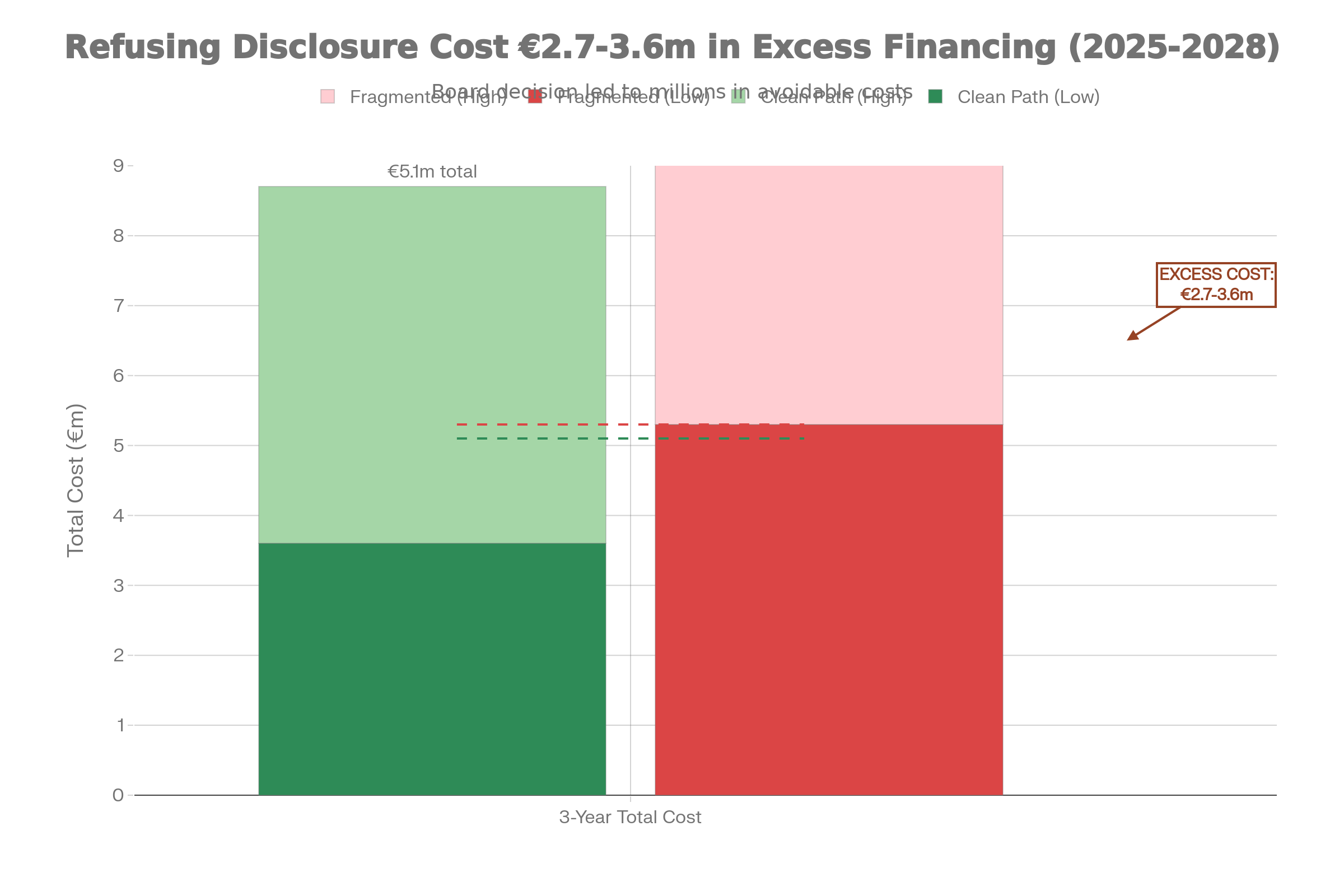
One year later, the share price has collapsed. We’ve paid millions more in financing costs than we needed to. The team that delivered 76% revenue growth has been dragged through a crisis that was completely avoidable. But the business never broke. What broke was the willingness of people, even good people, to tell the truth when it costs them something.
What I discovered later was much worse: the crisis wasn’t just avoidable. It was predictable. Because it had already happened once before, to the same chairman, with the same lenders, in the exact same structure.
2021–2023: Building something real
I came into Shape Robotics through the StoryKids acquisition in 2021 and found a company that existed on paper but not in reality. We changed that by doing the hard work. Not “I”—we. I drove strategy while people in Poland, Romania, and Moldova made the calls, traveled to schools, lost deals and won them, and convinced human beings to trust us with their classrooms. By 2023, we had 2,000+ schools across Europe using our robots. Real revenue. Real customers. Real growth that came from actually solving problems, not from marketing slides.
The Danish export establishment noticed. EIFO—the state export fund—backed us with guarantees. Danske Bank provided the facilities. From their perspective it was rational: export story, education tech, real European traction. Jeppe Frandsen was our chairman. He had relationships with EIFO. He had relationships with Danske. He told us this was a strong structure.
What nobody told me, and what I only discovered much later, was that Jeppe had been here before. In the exact same structure. With the exact same outcome.
October 2022: Paralenz goes bankrupt—Jeppe was chairman
Eighteen months before I became CEO of Shape Robotics, another Danish tech company called Paralenz filed for bankruptcy. Paralenz made underwater action cameras. It had raised capital, had EIFO guarantees, had Danske Bank facilities. It looked promising. It went insolvent anyway.divernet+1
When Paralenz went bankrupt in October 2022, EIFO lost north of 25 million DKK. Danske Bank recovered zero on their loan.
The chairman of Paralenz when it went insolvent was Jeppe Frandsen.
Let me say that again, because this is the center of the entire story: The man who was chairman when Paralenz went bankrupt owing EIFO 25+ million DKK and Danske Bank significant amounts, then became chairman of Shape Robotics—which had the exact same financing structure. EIFO guarantee. Danske Bank facility. Same lenders. Same chairman. Same structure.
And when I became CEO in May 2024, nobody told me this.
Why EIFO built an exit door
Now the uplisting makes perfect sense. When Shape Robotics moved from First North to Main Market in November 2023, we thought it was a promotion. What it actually was: EIFO building a technical exit condition that would allow them to withdraw their guarantee without having to publicly say “We don’t trust this chairman anymore because we lost 25 million DKK the last time he was in charge of a company with our guarantee.”
EIFO couldn’t say that publicly. It would be too direct. Too confrontational. Too Danish-uncomfortable. So instead they built a structure where the uplisting gave them a technical reason to withdraw that required no explanation and no admission that they had made a mistake by backing a company with Jeppe as chairman again.
André was CEO when we uplisted. Jeppe was chairman. I believe now that André understood what the uplisting meant, or at least suspected it. Jeppe didn’t. Or couldn’t. Because admitting what the uplisting meant would require Jeppe to admit that EIFO didn’t trust him because of Paralenz. And that would require confronting something he couldn’t confront: that he was repeating a pattern.
March 2024: The analyst and the trade
Before I became CEO, something happened that would give EIFO an additional reason to withdraw. An analyst named Lars Topholm from Carnegie published bullish research on Shape Robotics. The market reacted. The share price moved up. What the market didn’t know was that Topholm owned shares in the company when he wrote the note. EU Market Abuse Regulation requires disclosure of such interests. He didn’t disclose it. Shortly after his note drove the price up, he and related parties—including Martin Bungaard—sold into the rally.
Retail shareholders who trusted the “independent” analysis were left holding losses when the price collapsed later. Hundreds of millions in market value evaporated. André was CEO when this happened. He saw it. He understood what it meant. A month later, he resigned.
Jeppe was chairman. He saw the trading patterns too. But Jeppe believed this was a market issue, not a governance crisis. He believed that if we handled it quietly and carefully, EIFO wouldn’t see it as a reason to withdraw.
Jeppe was making the same calculation he’d made at Paralenz: that if we managed relationships carefully, the lenders would stay. He was wrong then. He was wrong now. But he genuinely believed it would work this time.
May 2024: Inheriting a pattern I couldn’t see yet
I became CEO on May 1, 2024, inheriting an analyst scandal and a chairman whose past I didn’t fully understand. By the time I took over, we were already sitting in a company that had become technically insolvent and hadn’t fully resolved its obligations with EIFO. In Danish law, that creates personal exposure for a chairman. Not criminal, but reputational and potentially financial.news.cision
For Jeppe, this wasn’t theoretical. He had already been chairman of an insolvent company that owed EIFO 25+ million DKK. Now he was chairman of another insolvent company with EIFO exposure. The board minutes from this period show discussions about personal liability, about restructuring, about whether Jeppe should step down.
The moment I learned the system’s real rules
When I first discovered that Jeppe had been chairman of Paralenz when it went bankrupt owing EIFO 25+ million DKK, I made a deliberate choice: not to hold it against him.
I was wrong to do that. Not because Jeppe is a bad person—he’s not. But because I misunderstood how Denmark actually works. I thought I was in Denmark, where experience and resilience are valued, where someone who survived a major company failure and came back to serve again would be seen as someone who had learned. I thought: “Jeppe knows what went wrong at Paralenz. That makes him better equipped to avoid it at Shape Robotics, not worse.”
I believed in redemption through experience. I believed in second chances. I believed that in a mature system, a chairman who had been through a crisis would be an asset, not a liability.
So when I found out about Paralenz, I didn’t say “We need a new chairman.” I thought: “Jeppe has been through this. He understands what EIFO looks like when they’re scared. He understands how Danske Bank behaves under pressure. He’s experienced. That’s valuable.”
I was wrong. Not because Jeppe was bad at the job, but because I fundamentally misread the system I was operating in.
I learned the real rules of Denmark much later, when journalists and analysts started attacking me for the Sav insolvency. Sav was a company I was a minority shareholder in. I didn’t control it. I wasn’t chairman. I wasn’t CEO. I had a small stake and some board involvement. When Sav ran into trouble, I was grouped with the people responsible, blamed for an insolvency I didn’t cause and couldn’t control.
That’s when it became clear to me: Denmark doesn’t actually value resilience and comeback. Denmark selectively holds failures against you depending on who you are and who’s attacking you. Journalists attacked me for Sav because it was a story. But EIFO never publicly attacked Jeppe for Paralenz. They just quietly built an exit door.
The system operates on two different standards simultaneously. You can be praised for your experience and judgment in the same breath that you’re secretly not trusted because of your past. You can be pilloried for a failure you didn’t control while the people making that judgment are making the same calculations in private.
I realized this too late. By the time I understood that EIFO didn’t trust Jeppe because of Paralenz, I had already made my calculation that his experience was valuable. I had already decided not to hold his past against him. I had already put him in a position where the system was secretly working against him while publicly accepting him.
In Romania, the system would have said: “Jeppe failed at Paralenz. EIFO lost 25 million DKK. Therefore we don’t trust him with another EIFO-backed company.” Clear. Direct. Transparent.
In Denmark, the system said: “Yes, Jeppe is chairman. That’s fine. We appreciate his experience.” And then built an exit door.
That’s the real lesson. It’s not that Jeppe was wrong to try again. It’s not that I was wrong to trust him. It’s that Denmark operates a two-track system where public acceptance and private mistrust can coexist indefinitely until they suddenly don’t.
And when they stop coexisting—when the exit door opens and EIFO withdraws—there’s no conversation about why. There’s just restructuring and crisis and everyone pretending nobody could have seen it coming.
I really like Jeppe. He’s a genuinely good person who tried to do the right thing for Shape Robotics. But he was trapped in a pattern he couldn’t see. At Paralenz, he had believed that managing relationships carefully would keep the lenders engaged. It didn’t work. At Shape Robotics, he believed the same thing. It didn’t work again.
The difference between someone who learns from failure and someone who repeats it is the willingness to look directly at what went wrong and why. Jeppe couldn’t do that. Not because he’s a bad person, but because Danish culture doesn’t teach you to do that. It teaches you to move forward gracefully, to not dwell on the past, to trust that relationships and good intentions will carry you through.
They don’t.
January 2025: When the banks asked the question—and the board exodus began
By January, the business reality was clear and undeniable. We needed EUR 29 million in financing. The standard solution was a convertible loan from banks. I sat with them and they looked at our fundamentals—real growth, real customers, 76% revenue growth in 2024—and said yes, we can do this. Then they added one condition. They explained it in banker language but the meaning was simple: we’ll give you the EUR 29 million, but you have to publicly disclose and formally address the analyst trading issue. We’re not sending capital into a governance fog. If you can see a market-abuse problem and won’t name it, that’s a credit signal to us about how you’ll handle the next crisis.
In existential terms, what they were saying was this: tell the truth, and we’ll stand with you. Hide it, and you’re on your own. I took this back to the board, where Jeppe was still chairman, expecting a difficult but necessary conversation.
At the same EGM on January 15, 2025, two board members—Moises Pacheco and Kasper Holst Hansen—resigned. The first departures.shaperobotics
Why Jeppe stayed silent—and why I initially agreed
By January 2025, we had discovered something infuriating: EIFO had never explicitly told us that the guarantee was tied to First North Market. The uplisting to Main Market had happened in November 2023—over a year earlier—and nobody at EIFO had said: “By the way, moving to Main Market voids your guarantee.”
I wanted to sue them. I had lawyers ready. The argument was simple: “You provided a guarantee, we made a material corporate decision based on that guarantee, and you never informed us that the decision would void it. That’s material non-disclosure.”
Then I discovered Paralenz.
When I learned that Jeppe had been chairman when Paralenz went bankrupt owing EIFO 25+ million DKK, something shifted in my thinking. I realized why EIFO was being so cautious with us. They weren’t being stupid. They were being scared. They had already lost massively. They didn’t want to admit it publicly. So they built an exit door instead.
Suddenly Jeppe’s strategy made sense to me. Instead of suing EIFO—which would have been public, confrontational, and would have forced them to defend their own failures—maybe we could manage this quietly. Maybe we could work with Jeppe’s relationships, preserve the Danske facility, find alternative financing, and move forward without dragging EIFO’s Paralenz disaster into public light.
I agreed with Jeppe’s approach. Not because I liked it, but because I understood it. Paralenz had cost EIFO 25+ million DKK and zero repayment from Danske Bank. If we sued EIFO, we’d be forcing them to admit publicly: “We made a terrible decision backing Paralenz. We lost 25 million DKK. Now we’re quietly retreating from Shape Robotics because we don’t trust the same chairman who was involved with Paralenz.”
So we took Jeppe’s path: discretion, relationship management, quiet problem-solving. No lawsuit. No public confrontation. Just work through it privately.
That was in late 2024 and early 2025. I thought it could work.
Then the banks said: “No. You have to disclose the analyst trading issue publicly. That’s the condition for the EUR 29 million convertible.”
And suddenly Jeppe’s entire strategy became impossible. You cannot simultaneously:
Manage EIFO quietly by not forcing them to admit their Paralenz failure
AND disclose the analyst trading issue publicly (which would trigger regulatory investigation)
AND ask for EUR 29 million in convertible financing
The moment the banks made disclosure non-negotiable, the quiet strategy died. And Jeppe couldn’t pivot. Because admitting that we needed to disclose meant admitting that his strategy of discretion had failed. It meant admitting that EIFO’s withdrawal was predictable because of Paralenz, and that we should have fought it publicly instead of managing it privately.
That’s when Jeppe’s silence became a problem. Not because he was hiding something malicious, but because he had committed to a strategy that couldn’t survive the real world.
Spring 2025: When comfort defeated truth—and more left
What happened next is the center of this story. The responses came wrapped in the language of reason and strategy. “We need to be strategic about timing.” “Let’s explore quiet solutions first.” “Think of the company’s reputation.” “We shouldn’t burn bridges with Carnegie.” “Lars is influential; we have to be careful.” Every single phrase meant the same thing: we are more afraid of one uncomfortable conversation than we are of losing millions in shareholder value.
This is where Kierkegaard’s warning becomes concrete and observable. A system designed for comfort will always choose comfort over truth, even when the cost is catastrophic. Jeppe had made this same choice at Paralenz: manage quietly, preserve relationships, hope the lenders stay. It didn’t work then. The board was making the same choice now.
The April 2025 AGM came and went. The specific authorization for the EUR 29 million convertible never appeared on the agenda. The banks’ conditions weren’t met. The truth wasn’t spoken.
But the exits continued:
Per Ikov stepped down, did not seek re-electionshaperobotics
Annette Lindgreen (Deputy Chair) did not seek re-electionshaperobotics
And then: André Fehrn returned as Chairman.shaperobotics
April 2025: André returns—temporarily
At the April 2025 AGM, André Fehrn returned as chairman of Shape Robotics. He replaced Jeppe, who stepped down to vice chairman. I was relieved. André knew the business. He understood what had happened. He had left once, but I thought—I hoped—that he had seen what his exit cost the company and the team, and was coming back to help finish what we had started. I considered him a friend. I thought he was coming back to fight.shaperobotics
For a few weeks, I believed we would drive through this together. The board minutes from that period show discussions about moving forward on disclosure, about confronting the analyst issue, about the necessity of governance cleanup. For a brief moment, it seemed possible that André’s return meant something had shifted.
It hadn’t.
On July 8, 2025, Jeppe Frandsen fully stepped down from the board. Another exit. In October 2025, Martin Kjær Hansen followed.news.cision+1
November 2025: History repeats itself exactly—and the final exits begin
In November, EIFO formally withdrew the guarantee. The Danske Bank facility lost its state backing. The bank’s risk jumped from partially insured to fully exposed. They demanded restructuring. The liquidity crisis we predicted in January arrived exactly on schedule.news.cision
This is the exact sequence that happened at Paralenz. EIFO guarantee disappears. Danske Bank is exposed. Company enters crisis. The only difference is that at Paralenz, the company went bankrupt. At Shape Robotics, we refused to.
By late November, the crisis was fully visible. The share price had collapsed. The headlines were public. And the board started its final exodus. The moment arrived that determined everything:
The Scanbox letter
I have that letter. I will attach it to this post as a PDF so anyone reading this can see it for themselves. The letter says: if you stay as chairman of Shape Robotics, we will terminate your employment. Not because of misconduct. Not because he violated any policy. Because he was serving as chairman of a company going through a governance crisis that required honesty.
This is the moment that revealed everything about Denmark in 2025. A man gets threatened with termination for serving on a board. Not for fraud. Not for misconduct. For being associated with a company that was choosing to confront truth instead of hide it. And the system that threatens him faces no consequences. No one asks: is this legal? Is this how we want Denmark to work? The man just quietly resigns, and everyone pretends it was his choice.
December 2, 2025: André quits again—and a hero steps forward
On December 2, 2025, André resigned as chairman. He had been back for seven months. His resignation statement was polite, wrapped in language about “transition phases” and “strategic adjustments.” But the board minutes show what actually happened: Scanbox threatened to fire him, and he chose his paycheck over the company.marketscreener
I don’t hate him. I feel something closer to pity. André is a good person who wanted to help. But when Scanbox—a comfortable, stable employer in the Danish establishment—told him to choose between them and us, he chose comfort. Jeppe had chosen comfort months earlier by stepping down rather than confronting what Paralenz meant. André chose it again.
On the same day, Helle Rootzén also resigned.
But on the same day André left, something remarkable happened.
Aurel Nețin, who had been Vice Chairman, was appointed Chairman.marketscreener
December 3-4, 2025: A chairman who puts his money where his mouth is
While everyone else was leaving, Aurel Nețin did something almost unheard of in Danish business: he bought shares with his own money in the middle of the storm.
December 3, 2025: Bought 106,000 shares at average price 6.05 DKK = 641,300 DKKmarketscreener
December 4, 2025: Bought 100,000 additional shares at average price 6.11 DKK = 611,000 DKKtradingview
Total: 206,000 shares, over 1.25 million DKK of his own capital, committed while the company was in public crisis.
This is not a symbolic gesture. This is a real commitment. This is what it looks like when someone chooses to drive through hell instead of stepping aside.
Aurel Nețin is the only board member who stayed. While Jeppe, André, Per Ikov, Annette Lindgreen, Moises Pacheco, Kasper Holst Hansen, Martin Kjær Hansen, and Helle Rootzén all found reasons to leave, Aurel stayed and bought in.
That’s the difference between someone who talks about commitment and someone who demonstrates it.
What I learned living between two worlds
The difference between Romania and Denmark is this: In Romania, everyone knows systems are corrupt. Everyone knows power protects itself. But at least people say it out loud. The lies are visible. In Denmark, the same mechanisms operate, but they’re wrapped in politeness, procedure, and the language of “personal choice.”
When Jeppe presides over Paralenz going bankrupt owing EIFO 25+ million DKK, then becomes chairman of Shape Robotics with the exact same structure, nobody says “This is a pattern.” They say “Let’s move forward.” When EIFO builds an exit door into the uplisting because they don’t trust Jeppe anymore, nobody says “We lost 25 million DKK last time with this chairman.” They say “It’s a technical issue related to market segments.” When Scanbox threatens André, it’s not framed as a threat. It’s framed as “concerns about reputational risk.”
Kierkegaard—Denmark’s own philosopher—spent his entire life warning against exactly this. He knew that a culture that values comfort and consensus above all else would eventually lose the ability to confront anything real. The existentialists I read as a teenager weren’t writing abstract theory. They were writing survival manuals for people in systems that had stopped telling the truth about themselves.
Most of the board was trapped in that system. They’re good people who cannot afford to confront uncomfortable truths because the system punishes anyone who does. I don’t hate them. I pity them. Because living your whole life repeating patterns you can’t name is a kind of death.
But Aurel Nețin is different. He saw the same crisis everyone else saw. He saw the same risks. And he chose to stay and buy in.
The only way out
The motto that has guided me through every crisis is the simplest statement of how reality works: In order to get out of hell, you have to drive through it. Not around it. Not by hoping someone else solves it. Through it.
Jeppe tried to manage around it at Paralenz. It didn’t work. He tried the same approach at Shape Robotics. It didn’t work again. André tried to avoid it twice—in April 2024 when he resigned as CEO, and in December 2025 when Scanbox gave him an ultimatum and he chose his salary. Seven other board members found their own reasons to leave when the crisis deepened.
After André left the second time, Aurel Nețin stepped up as chairman—and put 1.25 million DKK of his own money into the company while everyone else was running.
With the internal veto finally gone, we did what should have been done in January: filed the complaint, told the truth, engaged without euphemism. Within weeks, serious capital was ready to commit.
The team suffered. But their suffering burned away illusions about who would stand and who would run. You can see this in the board minutes. You can see the shift. You can see the moment the system changed because someone decided to stop repeating the pattern.
Now: The way forward
We are closer to exiting hell than we have ever been. The silence is broken. The truth is visible. The team has proven they can execute even when the system is crumbling around them. And we have a chairman who is willing to put his own capital where the board’s courage should have been months ago.
On January 19, 2025, Shape Robotics holds its extraordinary general meeting. At that meeting, we have the tools we need:
Proof of misconduct (board minutes, analyst trading records, EIFO communications)
New capital committed from serious investors who believe in the business
A team that delivered 76% growth and will continue to deliver
A chairman who bought in at the bottom instead of selling out
Regulatory filing complete on the analyst trading issue
A clean path forward with banks who understand the governance is finally sound
The existentialists understood this moment. Kierkegaard called it “the leap of faith”—the moment when you stop calculating and start committing. Dostoyevsky understood it as the price of authenticity: you don’t get freedom without confronting the truth that makes freedom necessary.
We have driven through the fire. We have paid the cost. We have learned the real rules of the system.
Now we rebuild Shape Robotics as a company that refuses to repeat Denmark’s pattern of comfort. We rebuild it with a team that knows what courage looks like. And we rebuild it with investors and partners who understand: in a world where most systems are failing because they chose comfort over truth, the companies that chose truth will inherit the future.
Mark-Robert Abraham
Founder and CEO, Shape Robotics A/S
Born and living in Romania.
Working in Denmark.
Learning what “history repeating itself” actually costs—and what it looks like when one person refuses to repeat it.
On behalf of the team that refused to repeat the pattern, and in gratitude to the one chairman who stayed when everyone else left.
Writing in personal capacity
December 24, 2025
The work is not finished. But we are no longer in hell. We are driving toward light.
See you at the EGM on January 19, 2026. The tools are ready. The path is clear. Now we execute.
Merry Christmas!
Thanks, Mark. Shareholder here, rooting for you and Shape Robotics, and for the change you can make for children and education.
It is in the section called: "Now: The way forward"